
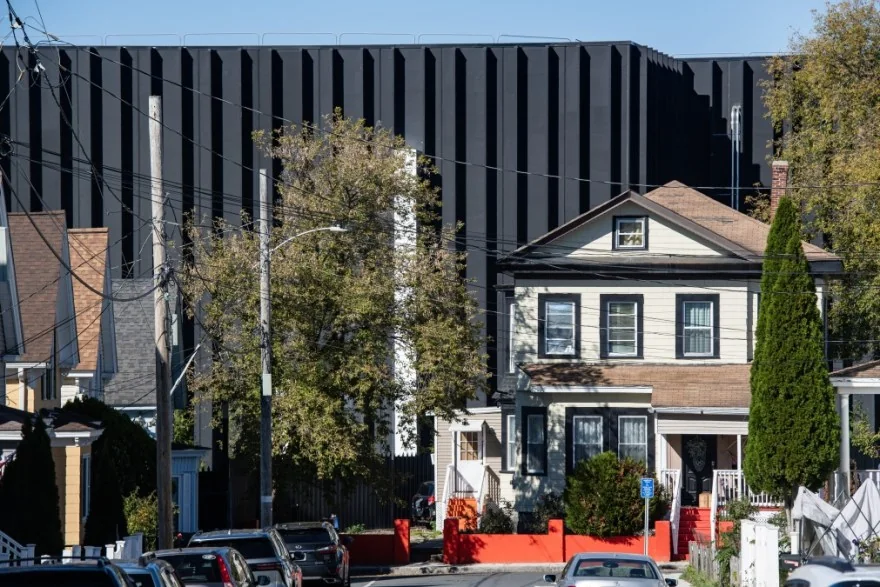
Data centers need buildings, grid connections, cooling equipment and access roads. As they grow, so do the demands on their sites. The question is therefore not just how much computing power we need, but where to put it.
The expansion of AI brings additional demand. We believe it makes sense to meet a greater share of that demand directly within businesses and public institutions. Suitable spaces in existing buildings should take priority over new construction. This can avoid covering more land with buildings and paving. Where heat is also needed, waste heat does not have to travel far.
Muhos: Forest clearance before the environmental assessment was complete
In Muhos, Finland, Google had around 330 hectares of forest cleared for a planned data center. According to a ZDF report dated November 2, 2026, the environmental impact assessment had not yet been completed at that point. Topsoil was also removed, and roads and storage areas were built.
The Finnish supervisory authority said on October 22 that it had called on Google’s subsidiary Tuike Finland to stop preliminary work that altered the environment in Muhos and Kajaani-Otanmäki. The company reported that it had halted the work. In Muhos, the unresolved issues include drainage ditches, possible acidic runoff and inadequate water management documentation.
The police are investigating. This does not establish criminal liability, and the extent of any damage to waterways has not been conclusively determined. Google told ZDF that it had begun the work based on its understanding of the required permits at the time.
Whatever the outcome of the proceedings, the landscape has already been altered. Before further new construction, we should therefore assess how much additional computing power could fit into suitable existing buildings.
Emergent effects of concentration
Where computing power is concentrated, electricity demand, waste heat and operating noise all converge on the same site. Several facilities draw on the same grid reserves, seek users for their heat in the same area and may affect the same neighborhood. An individual data center’s efficiency rating does not show how these demands interact.
Almost all the electrical energy a server consumes becomes heat. A continuous power draw of one kilowatt produces approximately 24 kilowatt-hours of heat in a day. Distributing the servers across several sites does not change that amount of heat. A large site, however, has to remove it from a small area.
Liquid cooling makes it easier to carry heat away from the chips. Using that heat still requires a suitable heat consumer; without one, it goes into the surrounding environment. Cooling itself requires electricity and, depending on the system, water. This adds further demands that have to be met at the same site. The concentrated electrical load can make grid upgrades necessary.
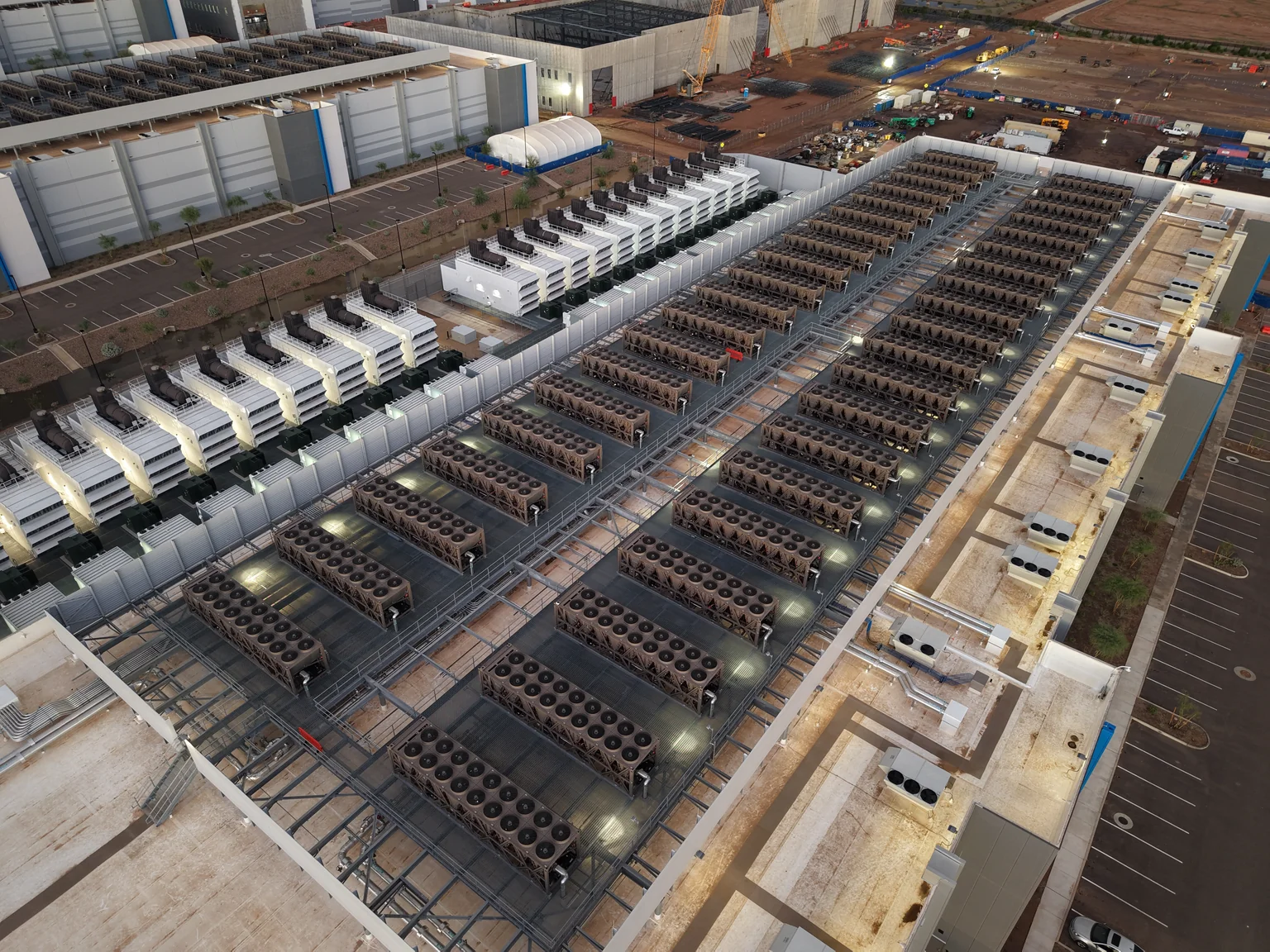
How much electricity cooling needs varies considerably between facilities. In its 2025 analysis, the International Energy Agency puts cooling’s share of electricity consumption at around 7 percent in efficient hyperscale data centers and over 30 percent in less efficient enterprise data centers. Even with efficient cooling, a large site still has a great deal of heat to remove.
Alongside the heat comes noise from fans, pumps and heat rejection units. With cooling running around the clock, individual tones can be especially intrusive at night or inside homes. An averaged sound level alone does not always capture this exposure.
An audible hum is not automatically infrasound. The German Environment Agency classifies noise below 100 hertz as low-frequency; infrasound is below approximately 20 hertz. On-site measurements are needed to establish which frequencies actually occur and how strong they are, including inside affected buildings.
When integrating computing into existing buildings, heat removal and noise control therefore belong in the same plan. Short pipe runs to a heat user help only if temperature and demand are suitable. Summer and other periods of insufficient heat demand require another way to remove the heat. The servers themselves belong in acoustically suitable technical rooms, not beside workstations.
Electricity demand for compute is growing in Switzerland
Swiss data centers consumed around 2.1 terawatt-hours of electricity in 2024. That amounts to approximately 3.6 percent of Switzerland’s electricity consumption, according to the Swiss Federal Office of Energy (SFOE) study published in May 2026. This share refers to electricity, not total energy consumption. The survey covers data centers, not exclusively AI applications or every computer down to end-user devices.

A comparison with 2019 requires a consistent scope: small server rooms are not included in the new survey. On a comparable basis, the figure for 2019 is around 1.77 terawatt-hours. The study calculates that consumption rose by 18 percent between then and 2024.
For 2030, the study expects 2.5 to 3.2 terawatt-hours. This range is a forecast. It estimates the remaining efficiency potential at around 38 percent.
The distribution of facilities also matters. In the SFOE interview about the study, project leader Martin Jakob describes the concentration of large data centers in the greater Zurich area and the neighboring regions of Aargau and Schaffhausen. Small and medium-sized facilities are more widely distributed. Additional capacity should therefore also be assessed for its effects on the local power grid.
Independent sites can limit outages
When many organizations use the same infrastructure, a single disruption can have far-reaching consequences. Two applications in separate racks, for example, still depend on the same power supply. A central management service can also bring seemingly independent systems down at the same time.
On March 3, 2026, the Associated Press reported, citing AWS, that two data centers in the United Arab Emirates had been hit directly by drones and a facility in Bahrain had been damaged. The outages described were local and limited. This does not imply a comparable threat forecast for Switzerland. The case does, however, show why physical dependencies belong in a risk assessment too.
Decentralized systems can keep an outage confined to a smaller area, provided they truly operate independently. Critical local functions must be able to keep running when the internet connection is interrupted. Recovery copies belong at a separate site, and emergency operation must be tested. This includes essential services such as authentication and name resolution.
Many poorly maintained sites, on the other hand, increase the attack surface. A local server is no substitute for an operating plan.
Integrate computing power into existing buildings
Users’ computing needs should be considered early in renovations and building design. For a business or public administration, a suitably equipped technical room may make more sense than additional capacity in a distant new building. Shared facilities are an option for business parks, for example.
| Central service | Local operation |
|---|---|
| Access needs a connection to the provider. | Works offline if required data and services are local. |
| The provider runs the infrastructure. | Arrange maintenance, updates and backups. |
Start by assessing existing spaces. Their suitability depends on factors including grid connection, heat removal and fire safety. Where existing buildings are sufficient, computing power should not require additional land to be sealed. This applies to centralized providers too: reusing buildings and distributing infrastructure geographically are separate decisions.
Equipment should match actual demand. Hardware that remains permanently unused ties up resources without providing a corresponding benefit. Spare capacity must be justified, and utilization checked during operation.
Using waste heat requires suitable temperatures and reliable demand, with a heat pump where necessary. The SFOE identifies proximity to heat users as an essential condition. This connection should be part of the plan from the outset.
Responsibility for operating the facility must be established just as early. Maintenance and security updates need clear ownership. Backups, monitoring and access control are part of the ongoing work of running a local system.
Decentralized inference for greater digital sovereignty
Training very large AI models will continue to need large data centers with tightly coupled computing resources. Running already trained models, known as inference, does not have to take place at the same site.
We expect more and more inference to run directly within businesses, public institutions and shared local facilities. Those who control the infrastructure can choose their models, set data access rules and decide how systems are operated. This reduces dependence on individual cloud platforms and strengthens digital sovereignty.
We will help build this decentralized AI infrastructure. We believe computing power belongs close to its users, in suitable existing buildings and where its waste heat can be put to use. This combines greater control over AI with infrastructure that uses existing space rather than building on previously undeveloped land.
For practical guidance, see our guide to on-premise AI for SMEs and our AI cost calculator.
Research as of November 8, 2026.